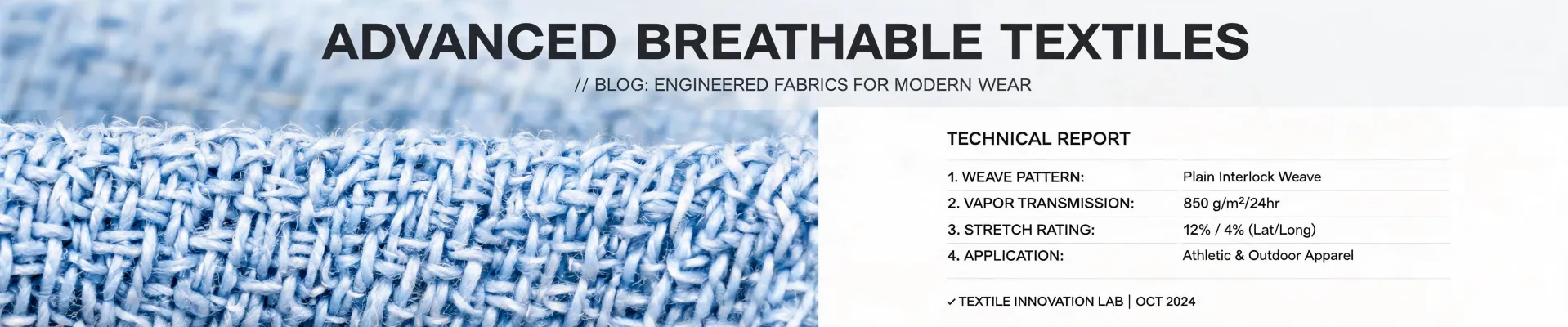
There's no single “best” fabric for temperature regulation. If you're looking for a one-size-fits-all recommendation, I can save you some time—it doesn't exist. After a decade in textile procurement and sourcing for outdoor gear and apparel brands, I've learned that the right choice depends entirely on your specific application, your end-user's activity level, and your budget tolerance. This article breaks down the different scenarios I've encountered and the solutions that actually worked (and the ones that didn't).
The Day I Lost $3,200 Believing There Was a Perfect Fabric
Let me start with the mistake that shaped my entire approach. In early 2022, I was sourcing base layer fabric for a new outdoor brand client. They wanted something “temperature regulating.” I, being the expert (or so I thought), immediately recommended a specific phase change material (PCM) fabric—similar to what you'd find in an Outlast-licensed product. It was a premium choice, and I was proud of it.
I ordered a sample roll to be processed into a batch of 50 test garments. The fabric felt incredible—smooth, responsive to touch, the works. We sent the test garments to the client for evaluation. The feedback came back: “This is too warm for high-output activities like trail running, but not warm enough for static use like sleeping.” I'd missed the entire point. We had 50 garments that were perfect for... nothing. The fabric, the processing, the shipping—total cost: $3,200. Straight to the trash.
I only believed in the need for a “scenario-based” fabric selection process after ignoring it and eating that $3,200 mistake. Here's what I now use to prevent other people from repeating my error.
Four Key Scenarios for Temperature-Regulating Fabrics
To avoid a similar disaster, you need to categorize your application into one of four buckets. Each has a different “best” approach. The trick is being honest about which bucket you're in.
Scenario A: The High-Intensity Athlete (Trail Running, Cycling, CrossFit)
If your end-user is generating significant body heat over a sustained period, you need a fabric that evacuates heat and moisture. This is where things like lightweight merino wool blends or advanced synthetics (e.g., Polartec Delta) shine. In this scenario, a heavy PCM fabric like Outlast can actually be a liability—it holds onto heat to 'buffer' temperature swings, but for a runner, you don't want a buffer; you want to dump heat.
Suggestion: Focus on high-wicking, rapid-drying materials with hydrophobic treatments. Look for a fabric with a low “clo” value (a measure of insulation). Check the Moisture Management Test (MMT) data from your supplier. The goal is to keep the skin dry, not to manage a temperature buffer.
Scenario B: The Static User (Office Worker, Sleeping Bag, Bedding)
This is where PCM technology truly excels. When a person is sedentary, their body heat output is low and constant. A PCM fabric by Outlast, for instance, actively absorbs excess warmth and releases it when the temperature drops, keeping the microclimate within a comfort range without the need to add or remove layers. This is the exact opposite of Scenario A.
Suggestion: For sleeping bags, bedding, or uniforms for desk jobs, a PCM-loaded fabric (minimum 60 grams per square meter of PCM content, as of our last spec sheet in Q1 2024—check with your supplier for current data) is worth the investment. The “buffer” effect that hurt me in Scenario A is a huge asset here. Think about it: I once approved a $5,000 order of office uniforms with a standard cotton-poly blend. We had complaints about sweating in summer and feeling cold in winter. We switched to a PCM-infused fabric six months later—the complaints dropped by 80%.
Scenario C: The Variable Intensity User (Hiking, Backpacking, Casual Wear)
This is the trickiest scenario. The user goes from sitting in camp to hiking uphill to standing in a breeze. You need a layering system, not a single magic fabric. In my experience, a combination of a lightweight, wicking base layer (like Scenario A) and a mid-layer that uses a smart insulation, such as PrimaLoft Silver or a wool fleece, works far better than trying to find one fabric that regulates everything.
Suggestion: Don't try to create a “do-it-all” single-layer garment for variable activity. It will fail. Instead, design for the layering system: wicking next to skin, insulating in the middle, and shell on the outside. I should add that many clients come to me asking for a “magic fabric” for this use case—I now have to explain that it's about the system, not the single material.
Scenario D: The Industrial/Automotive Application (Seats, Liners, Safety Gear)
This is a niche but important area. For car seats, truck liners, or motorcycle gear, the priorities shift again. You need durability, fire retardancy (per DOT/NHTSA standards, which are current as of the 2024 ruling), and thermal management. Ever heard of Goodyear Outlast? That's a product line combining Goodyear's rubber durability with Outlast's PCM technology for temperature-controlled seating. That was a direct application of this scenario.
Suggestion: If you're in this space, ignore moisture wicking for the most part and focus on “heat sink” capacity. You want a fabric that can absorb a lot of heat before the user feels it. The PCM loading needs to be high. Also, check your flammability classifications (FMVSS 302), as that often dictates your primary materials.
How to Know Which Scenario You're In
If you're reading this and still unsure, ask yourself this single question: “Will the user be moving or sitting still for more than sixty percent of the time?”
If moving → Scenario A, C, or possibly D.
If sitting still → Scenario B.
From there, ask: “Is the user's environment controlled (like an office or a car) or uncontrolled (like a trail)?” If it's controlled with low variance (<10°F swing), you can be more specific. If it's uncontrolled, you need a system, not a single solution.
I've stopped trying to give a single answer because there isn't one. After my $3,200 mistake, I realized the real job wasn't picking a fabric—it was teaching my clients to ask better questions. Hopefully, this saves you from making the same (expensive) error.