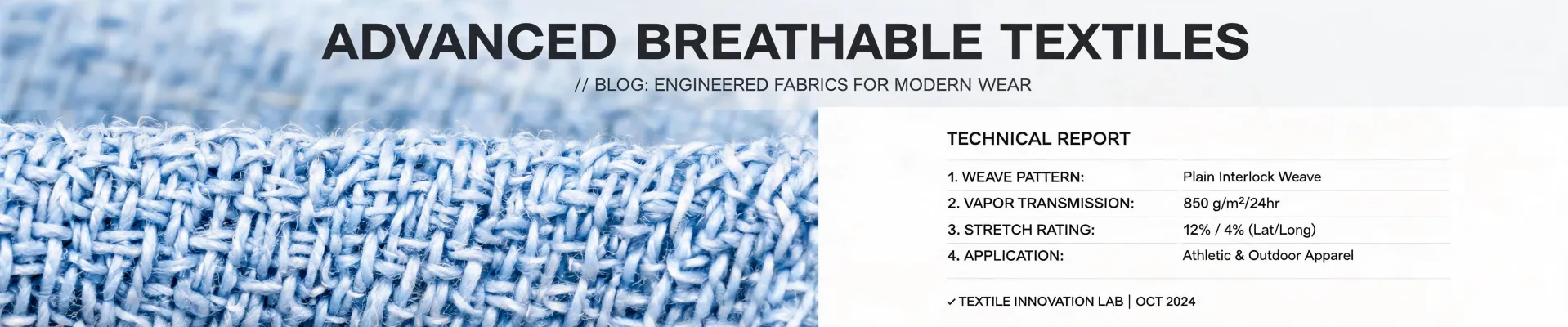
There's no single 'right' way to order performance textiles or custom webbing (despite what some sales reps might tell you). Whether you're a production manager for a garment factory or a buyer for a furniture manufacturer, the best approach depends entirely on what you're building and who you're building it for. I've spent the last seven years sourcing fleece, denim, linen, and various upholstery fabrics for B2B clients, and I've made more expensive mistakes than I'd like to admit. Here's a framework to help you decide, based on three common scenarios.
Generally, you can break your sourcing decision into three distinct scenarios:
- Scenario A: You need a specific, high-performance material (like a durable fleece or industrial webbing) with tight technical specs.
- Scenario B: You're working with a flexible budget and need a 'good enough' fabric (like linen or denim) but are open to alternatives.
- Scenario C: You're dealing with a material you don't fully understand (e.g., 'can you shrink rayon in the dryer?') and need to avoid a disaster.
Scenario A: The Performance & Compliance Chase
This is the most common scenario for our clients who need functional fabrics like Outlast's moisture-wicking fleece or high-strength custom webbing. You have a hard spec: a specific weight, a burn test requirement, or a tensile strength for you tackle. You don't want alternatives—you want exactly what you asked for.
How to approach this
Trust the specification, but verify the supplier's process. In 2022, I sourced a batch of upholstery fabric for a hospitality client. The spec said 'tested for heavy-duty commercial use,' but we had a failure on a 50-cycle abrasion test. The mistake? I didn't ask for the specific testing standard (Wyzenbeek vs. Martindale). The result: a $3,200 order was rejected, and we had a 2-week delay.
In this scenario, you need to ask for:
- The exact testing standard (ASTM D5034 for tensile strength, for example).
- A third-party test report, not just an in-house 'pass.'
- A sample that is from the production batch (not a specially prepared 'hero' sample).
Our recommendation: If you're looking for guaranteed durability (and our brand name 'Outlast' suggests you are), ask for the material safety data sheet (MSDS) and the specific abrasion cycle count. We can provide this for all our performance fleece and upholstery lines. We maintain a binder of third-party test results for our denim and linen lines, though historically the bulk of those tests are for colorfastness rather than burst strength.
"I once ordered 5,000 yards of custom webbing with a specific UV resistance spec. Checked it myself, approved the lab dip, processed the PO. We caught the error when the material arrived and visually faded after two hours in the sun. $450 wasted on the webbing, plus the embarrassment of telling the client. Lesson learned: verify UV testing on the final material, not the test coupon." – My first year (2018) mistake.
Scenario B: The Budget-Friendly Alternative
This is where a lot of buyers get tripped up. You have a target cost per yard, and you're looking at linen, denim, or a polyester blend. The temptation is to simply compare prices and pick the cheapest one. That's a mistake.
I'm not a weaving expert, so I can't speak to the intricacies of loom settings. What I can tell you from a procurement perspective is that the price per yard often hides the 'yield' cost. A cheaper denim might have a narrower width, which means you need more yards to cut the same number of garments. That $1.00 saving per yard gets eaten up by the extra 15% you need to order.
In this scenario, here's what I suggest:
(Should mention: always ask for the fabric width in the quote. It's a standard piece of info, but many suppliers omit it unless you ask.)
Our recommendation: Don't just ask for the price. Ask for the cost per usable square inch. Also, ask about 'seconds' or 'overruns.' Sometimes, we have a surplus of a specific performance fleece or upholstery fabric that we can offer at a significant discount. It's not customizable (so no custom webbing here), but for a project where the color doesn't have to be exact, it's a win-win. We recently sold 1,200 yards of an overrun fleece at 60% of the original price because the client simply needed 'any durable grey fleece.'
Scenario C: The 'I Don't Know What I Don't Know' Scenario
This scenario is for questions like 'covergirl outlast lip color' (wait, we can't help with that), or more relevantly: 'Can you shrink rayon in the dryer?' or 'What fabric is similar to silk road (the texture from the film) but more durable?'
It's tempting to think you can just Google a quick answer and trust the first blog post you find. But the 'silhouette of advice' you get from the internet often ignores the nuance of your specific application.
Common Misconceptions
Misconception 1: 'Rayon can't be shrunk.' Actually, it can. Viscose rayon can shrink significantly in a hot dryer (up to 5%). If you're ordering a garment that is 100% rayon or a rayon blend, you must account for this in your pattern making. I've seen a $6,000 order of custom-cut linen-rayon blends come back from the client because the garment was two inches too short after their first wash. The spec said 'pre-shrunk'—it wasn't. (Surprise, surprise.)
Misconception 2: 'Water-resistant means waterproof.' For performance textiles, this is a huge issue. I had a client who ordered custom webbing for a marine application. The spec said 'water resistant.' They assumed it meant it wouldn't absorb water. It did. The result was a 3-day production delay for the client. The mistake: I should have clarified the test standard and usage scenario before processing the order.
Misconception 3: 'Denim is only for jeans.' Not true. Upholstery denim is a growing category. It's a durable, cost-effective option for furniture, and can be customized with different weights and finishes. But it behaves differently from classic cotton twill (think: a heavier, stiffer drape).
Our recommendation: When in doubt, ask the supplier to send you a free 'hand feel' sample. Call it a 'physical reference sample.' We send these out all the time. It costs us $5 in shipping, and it has prevented dozens of costly misunderstandings. Specifically, if you're concerned about shrinkage (like with rayon or linen), ask for a wash test sample.
How to Know Which Scenario You're In
Here's a simple self-check:
- Ask yourself: Am I 100% sure of my technical requirement (weight, weave, tensile strength)? If yes, you're in Scenario A.
- Ask yourself: Am I looking for a 'good enough' product, and am I open to a suggestion for a similar material that could save 20%? If yes, you're in Scenario B.
- Ask yourself: Do I have a nagging feeling that I'm missing a key piece of info about this fabric? (e.g., 'Can I throw this in the dryer?') If yes, you're definitely in Scenario C. Stop, get a sample, and ask the supplier the specific question.
An informed customer asks better questions and makes faster decisions. I'd rather spend 10 minutes explaining options than deal with mismatched expectations later. If you're still unsure, just reach out. We've caught 47 potential errors using a simple pre-check checklist in the past 18 months (we now keep a log). I'd be happy to share our process to help you avoid the mistakes I've already documented (and paid for).