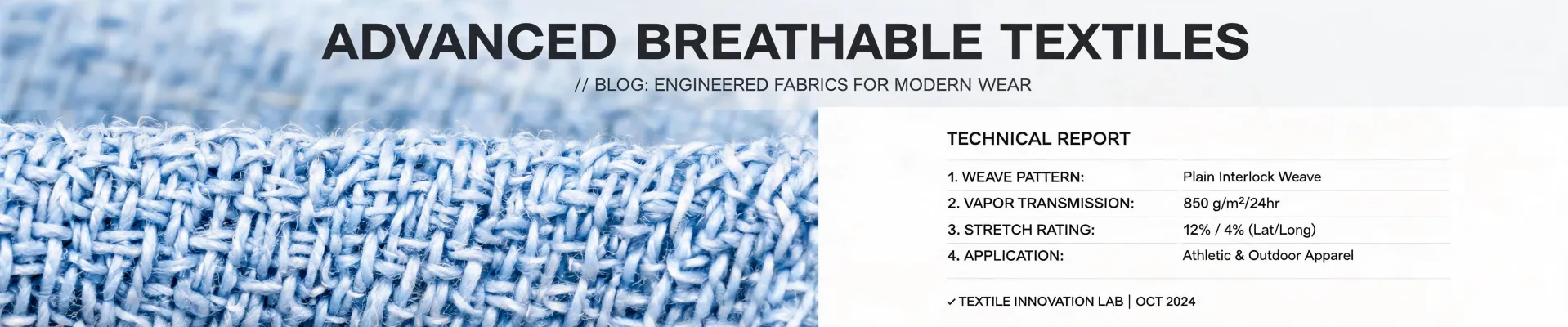
Before anything else: if you searched for the Outlast Trials PS4 sale, this is the wrong Outlast. The Outlast I work with is a fabric. Stick around if you buy fabric, because the mistake I'm about to describe will feel familiar.
I'm still a little embarrassed about the 2024 order. I approved what looked like a great deal on camper upholstery fabric, told my boss it was a no-brainer, and then spent the next three weeks explaining why the savings had turned into a loss.
I run procurement for a 12-person upholstery shop. We do custom work for campers, boats, and light industrial seating. Fabric alone runs about $85,000 a year. I've been tracking every order, invoice, and do-over for the past six years. The spreadsheet is not pretty, but it tells me exactly where the money goes.
When I first started buying upholstery fabric online, I assumed the lowest price per yard was the right answer. It seemed obvious. Same fabric, lower price, done. That assumption cost me more than I like to admit.
The Order That Changed My Math
In early 2024, we booked six campers for full reupholstery. All six needed the same graphite gray marine polyester for walls, seating, and bunk cushions. The order came to 540 yards, plus waste. The color had to be consistent across rolls, and the fabric had to stand up to UV, moisture, and constant rubbing.
Three suppliers made the short list:
- A large online fabric store at $3.42 per yard for a stock color.
- A yarn discount outlet at $2.95 per yard for a custom-order gray, with free shipping over $300.
- A specialty fabric supplier at $4.10 per yard, with a swatch kit included. They also carried Outlast performance fabrics.
Guess which one I chose. The yarn discount outlet. I did the math out loud: $1.15 per yard difference times 540 yards equals $621 in savings. I called it a no-brainer. My boss, who has been in this business for 25 years, asked a simple question: 'Have you accounted for the width difference and the shipping surcharge?' I brushed it off. The listing said 60-inch fabric. The shipping was free over $300. What was there to account for?
The fabric arrived on time. That was the only thing that went right.
The roll label said 54-inch width. The free ground shipping didn't cover our delivery address, so we paid a $68 surcharge. The graphite gray was darker than the online photo, almost slate. And we didn't order a physical swatch first, because I was in a hurry to save money. That decision set off a chain reaction.
First, we paid $214 in cutting fees because every roll needed special handling, and the outlet didn't mention that fee until invoicing. Second, the width difference changed our pattern layout. We had cut for 60-inch goods; at 54 inches, we lost too much yield. Third, the customer rejected the color, and the outlet charged a 15% restocking fee on the returned rolls.
By the time we sourced a matching gray from another supplier, paid for extra yardage, spent 18 hours re-cutting and re-fitting, and gave the customer a goodwill discount for the delay, the total hit $3,404.52 on that 540-yard job. That works out to $6.30 per yard. The specialty supplier's quote for the same yardage was $2,214. The 'cheap' order ended up $1,190 more expensive before we even counted the extra stress.
I'm still not sure why the outlet shipped a different width than the listing. Maybe a listing error. Maybe a bait-and-switch. My best guess is they knew, but I can't prove it. Either way, it's on me for not verifying.
Looking back, I should have ordered swatches from all three suppliers and measured them myself. At the time, I was in a hurry, and the unit price looked too good to pass up. It passed up the real cost.
Where to Buy Upholstery Fabric Online? That's the Wrong Question
People ask me where to buy upholstery fabric online. Honestly, there are plenty of places: big online fabric stores, specialty marine and RV suppliers, yarn discount outlets that sell more than yarn, and mills that ship direct. The real question is how you compare them.
The fastest way to level up your fabric sourcing is to switch to total cost thinking. Unit price is just the opening bid. The total cost includes price per yard, width, cutting fees, shipping surcharges, restocking fees, lead time, labor, and return risk.
I'm not against discount outlets. Some of our best finds came from places with messy websites and low prices. But now I verify everything. When a supplier sent us an Outlast performance fabric sample, I didn't just look at the price. I asked for the spec sheet, the abrasion data, and a sample we could abuse. The process doesn't skip because the brand sounds good.
Another red flag is a vague environmental claim. Per FTC Green Guides (ftc.gov), claims like 'recyclable' need to be substantiated. If a fabric is described as 'green' or 'eco-friendly,' ask for documentation. A premium price tag shouldn't be doing the talking.
The TCO Checklist I Use Now
Before I approve any fabric order over $500, I run through this:
- Compare by usable width, not just per-yard price.
- Require a physical swatch before production.
- Get cutting, restocking, and shipping policies in writing.
- Calculate yield with our actual patterns, including direction and nap.
- Factor in labor and lead time.
- Ignore vague claims unless backed by documents.
If you're in your own Outlast trials—a trial vendor, a trial fabric, a trial run—the fastest way to level up is to calculate the total cost before you order, not after the spreadsheet tells you what went wrong.
Trust me on this one. I learned it the expensive way.