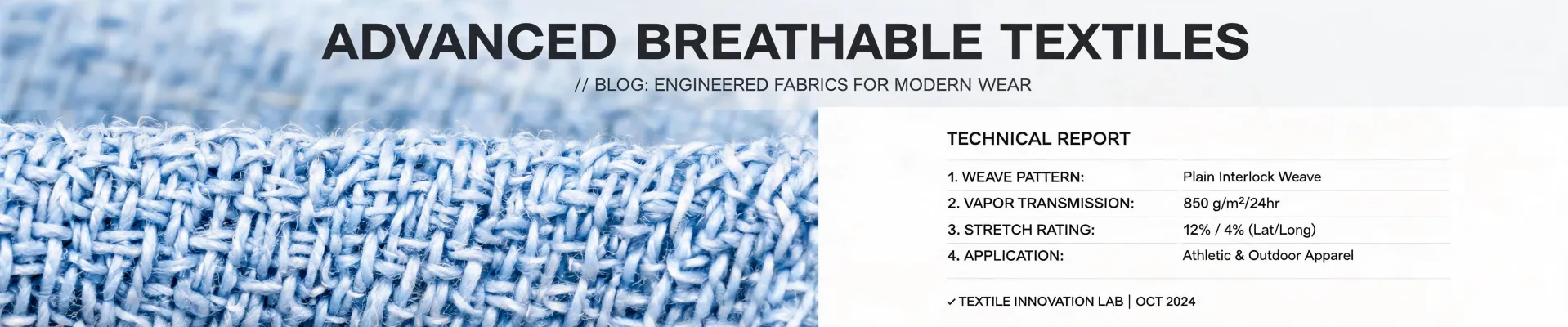
Small orders don't justify lower quality standards. Period.
I've worked as a quality and brand compliance manager at a fabric company for over four years. Every week, I review everything from custom fleece to 60-inch outdoor canvas before it ships. And honestly, the worst quality problems I've seen weren't on the big orders—they were on small ones, where someone decided "it's just a trial, it doesn't matter."
Here's why that's backwards, and why I believe small customers—especially startups and independent makers—deserve the same rigorous checks as the big guys.
Small orders expose weak specifications
The first thing I learned in this role: a small order is the cheapest way to find out if your spec is actually being followed. In our Q1 2024 quality audit, we received a batch of custom fleece where the weight was visibly off—roughly 10% lighter than our standard spec. Normal tolerance is around 3–5%. The vendor said it was "within industry standard." We rejected it anyway. It cost them a redo, and now every contract includes a weight requirement.
That wasn't a huge order. It was a sample run for a prospective client. If we had let it slide because "it's only a test," the client would have built their product on bad fabric. That's not a small issue—that's a small order with a potentially big consequence.
In our Q1 2024 quality audit, roughly 12% of first deliveries were rejected due to spec mismatches—and about 70% of those were small or sample orders.
Durability tests aren't just for big runs
Some people think durability testing—what I call an outlast trials walkthrough—is only worth it for bulk production. I disagree. We run the same tests on small batches, especially for outdoor materials. The best outdoor canvas fabric I've reviewed, for example, is a 60-inch option that we test for UV resistance and abrasion. That's not a luxury; it's basic responsibility.
The walkthrough is straightforward: check the construction, test the seams, expose samples to conditions they'll actually face. It takes time, sure. But skipping it on a small order tells the customer you don't care if their product survives. I've never fully understood why some suppliers treat testing as optional for low quantities. My best guess is they see it as a cost center rather than a trust builder.
My gut vs. the spreadsheet
I'm not a textile chemist, so I can't speak to the chemical breakdown of every coating. What I can tell you from a quality perspective is that reliability matters more than price. A few years ago, I ran a cost comparison between two potential suppliers. The numbers said the cheaper option was about 15% less expensive. My gut said stick with the more established one, mainly because their response time was suspiciously slow. I went with my gut. Later, we learned the cheaper supplier had a delivery reliability issue that would have hit us on a tight deadline.
If you're a small buyer, you can't absorb that kind of risk. You need a supplier who treats your timeline like a commitment, not a suggestion. Small orders often have tighter windows because the customer is testing a product launch or a season-specific line. A delay is not an inconvenience—it's a lost opportunity.
Customization is where small buyers shine
In my experience, small customers are actually more likely to want customization. They're not just ordering off a menu. Maybe it's a custom webbing width for a niche product, or a custom fleece color for a brand launch. That's exactly why clear specifications matter so much. We once had a customer ask for a specific Pantone color on a small run of fabric samples. It took two rounds to get it right. Was it profitable? Barely. But the customer now sends us quote requests for full production runs.
People assume customization is only for big budgets. But small customers often know exactly what they want because they've had to be more deliberate. They deserve the same attention to detail as someone ordering 50,000 yards.
Consistency is harder than it looks
Another thing people underestimate: batch consistency. You can get a great sample, but if the next batch doesn't match, you've got a problem. I've seen this with silk wave caps—suppliers get the fabric right once, then the next production run has a different hand feel. For small brands, that's catastrophic because their customers notice small changes.
Even something like the backing on an acrylic bar sign can be affected by inconsistent fabric. If the material shifts or stretches, the sign warps. It's not a huge textile application, but it's still a quality issue that reflects on the supplier.
But what about the margin?
I hear the counterargument all the time: small orders don't make enough money to justify extra care. To me, that's a short-term view. We've gotten some of our best long-term clients from $200 sample orders. When I was starting out, the vendors who treated my small orders seriously are the ones I still use for $20,000 orders. Small doesn't mean unimportant—it means potential.
I'm not saying every small order is going to turn into a huge account. But even the ones that don't can teach you something about your own process. Every time we've tightened a spec or improved a test, it's made our bigger runs better too. That's not charity—it's good production practice.
Bottom line
Quality isn't about volume. It's about whether the product meets the spec, regardless of the number of units. I've rejected 8,000 items in storage conditions gone wrong, and I've rejected 15-yard test rolls for the same reason: the material didn't perform as promised.
Take it from someone who reviews fabric all day: small customers deserve the same assurance as big ones. Give them that, and you might just earn their loyalty for life.